
The proof is in the search results
Capturing High-Intent Search Demand in the Power Equipment and Data Centre Industry
Power Distribution, Transformers & Data-Centre Power Equipment
Learn how product-led SEO created visibility across PDUs, remote power panels, transformers and power-quality searches.
The Situation
The company serves technical power applications where search demand is fragmented across product names, abbreviations, transformer types, data-centre terminology and engineering questions. One generic ‘products’ page could not capture this search landscape
For a B2B company, the real SEO opportunity begins before a prospect knows the supplier’s name. Buyers search for equipment, applications, technical terms and problems. If the right page is absent from those searches, the enquiry can go to a competitor before the sales team ever knows the opportunity existed.
What HariSoft Discovered
The SEO programme started before page optimisation. HariSoft studied the client’s products, target buyers, competitors and the organic search landscape to understand how the market searched for the company’s capabilities. Those findings influenced the website architecture, page hierarchy and content plan.
This mattered because an industrial website can look professional and still fail as a search asset. If product categories, applications and buyer terminology are not reflected in the structure, Google has fewer clear signals about which page should rank for which commercial search.
Building SEO Into the Website Foundation
HariSoft designed and developed the website after studying the competitor space and search opportunity. SEO was therefore part of the website plan rather than an activity added after launch.
The technical foundation included search-friendly site architecture, on-page structure and performance work focused on page load and layout stability. The website was tested against Google’s PageSpeed Insights benchmarks and deployed on a performance-focused SiteGround hosting environment.
The objective was simple: give the SEO programme a technically sound website on which authority and content could compound over time.
The SEO Approach
- Commercial keyword research built around buyer intent rather than traffic volume alone.
- Keyword-to-page mapping so each important search had a clear destination.
- Product and solution page optimisation for technical relevance and commercial clarity.
- Supporting technical content to answer research-stage questions and strengthen topical authority.
- Internal linking between educational content and commercial pages.
- Ongoing rank tracking to identify gains, losses and the next search opportunities.
Building Authority After Launch
A fast website and well-structured product pages created the foundation. They were not the whole programme. HariSoft then worked on expanding the website’s topical footprint and external authority.
- Technical blog writing around buyer questions, applications and engineering topics.
- FAQs designed to answer narrow search queries and strengthen product-page relevance.
- Relevant backlink acquisition and industry mentions.
- Press releases to create third-party references and broaden brand presence.
- LinkedIn content to support subject visibility and keep technical themes active beyond the website.
- Ongoing internal linking, page refinement and ranking analysis.
The goal was not to chase a third-party authority score for its own sake. The goal was to build a stronger body of relevant content, references and search signals around the company’s real areas of expertise.
The Evidence
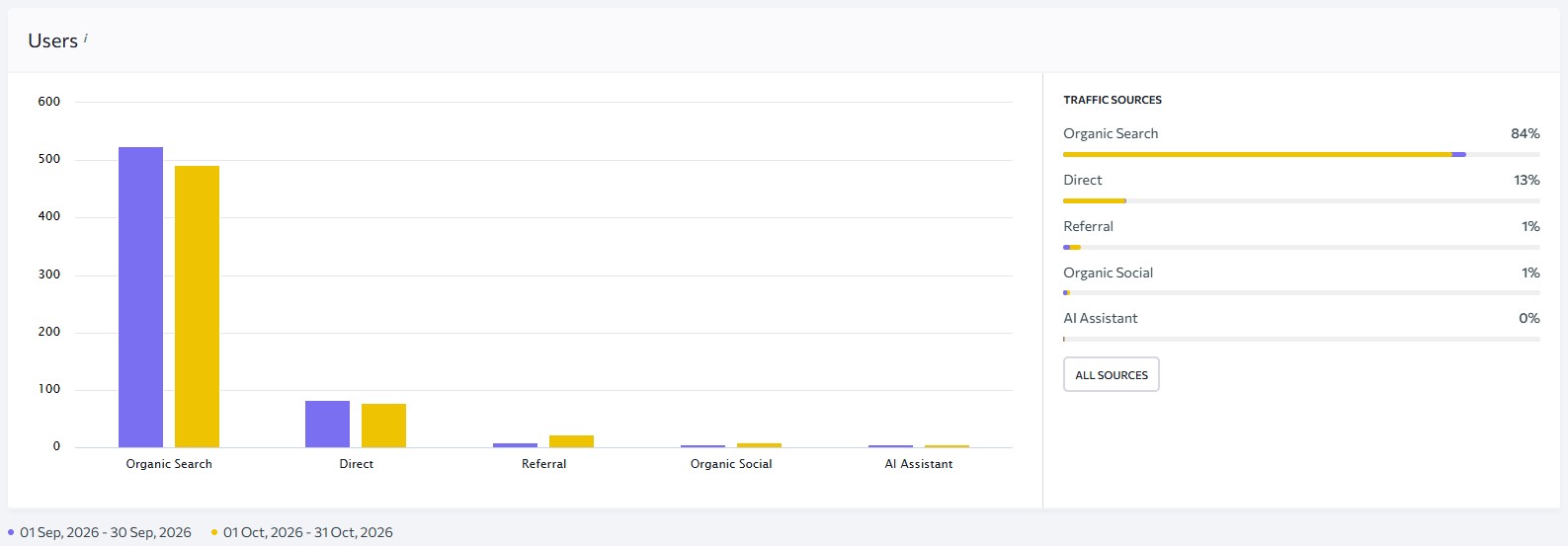
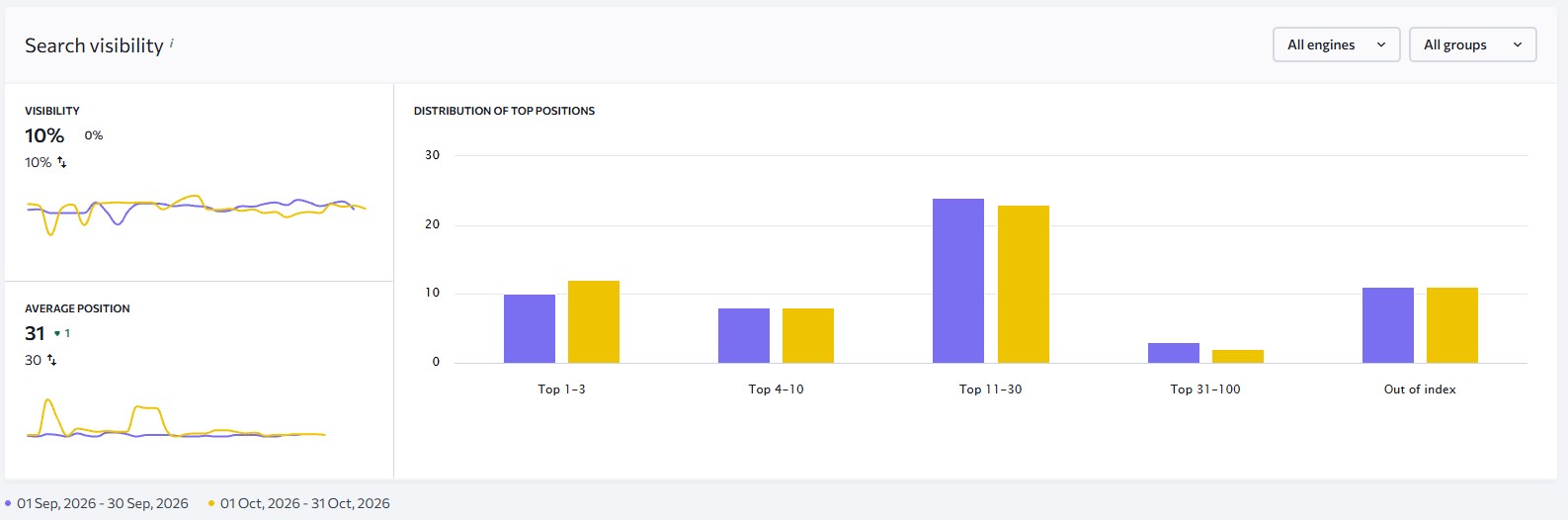
The August report shows 49 tracked keywords in the SERP, 9.2% search visibility and a traffic forecast of 318. ‘PDU manufacturers in India’ ranked #1, ‘remote power panel manufacturer’ #1, ‘PDU manufacturers’ #2, and several SCVS, transformer and foil-winding searches appeared on Page 1.
Selected Search Positions

What This Means for a B2B Manufacturer
A Page 1 ranking is not useful because it looks good in a report. It is useful because it creates a new route into the business. A buyer can discover the company while researching a product, comparing a technology or trying to solve an engineering problem.
That is the compounding effect of B2B SEO. One homepage becomes many entry points. Product pages, technical articles, application pages and FAQs can each bring the company into a different part of the buying journey.
The uncomfortable question for any industrial company is simple: if your website is not visible for those searches, whose website is?
HariSoft’s Role
HariSoft’s role covered the complete organic-search foundation: competitor and search-space research, website strategy, website design and development, technical performance, product and solution SEO, technical content, FAQs, backlinks, press releases, LinkedIn content and continuous search analysis. The work was designed as one connected B2B growth programme rather than a collection of isolated SEO tasks.
The HariSoft B2B SEO Framework
Competitor Research -> Search Architecture -> Website Design & Development -> Technical SEO & Performance -> Product/Solution SEO -> Blogs & FAQs -> Backlinks & PR -> LinkedIn Content -> Continuous Optimisation -> Organic Visibility
Request a B2B SEO Consultation with HariSoft
Your prospects may already be searching for the products, components or engineering solutions you sell. HariSoft can review your current Google visibility, identify commercial search gaps and show where competitors may be getting discovered before you.